Red Light Therapy: Why You Should Add It to Your Skin Care Routine
I get asked about red light therapy all the time—usually after a patient has seen an ad for an at‑home device or spotted it on social media. The question is always some version of: “Does this actually work, or is it just hype?”
The short answer: it works. But not all red light therapy is created equal, and that’s what I want to talk about today.
What red light therapy actually does (the science part)
Red light therapy—also called photobiomodulation or low‑level light therapy—uses specific wavelengths of red and near‑infrared light (typically 620–850 nanometers) to penetrate the skin and stimulate cellular activity.
Here’s what happens at the cellular level:
Light is absorbed by mitochondria, the powerhouses of your cells.
Specifically, it activates an enzyme called cytochrome c oxidase, which accelerates ATP (energy) production.
When your skin cells have more energy, they repair damage faster, produce more collagen, and function more effectively.
This isn’tspeculation. The mechanism was first documented in the 1960s, and thousands of studies since have confirmed its effects on skin health.
Red Light Therapy Benefits
For skin specifically, red light therapy offers two primary benefits:
Increased collagen synthesis – Fibroblasts (the cells that make collagen) become more active and productive.
Reduced inflammation – Red light decreases inflammatory markers and increases antioxidant enzymes.
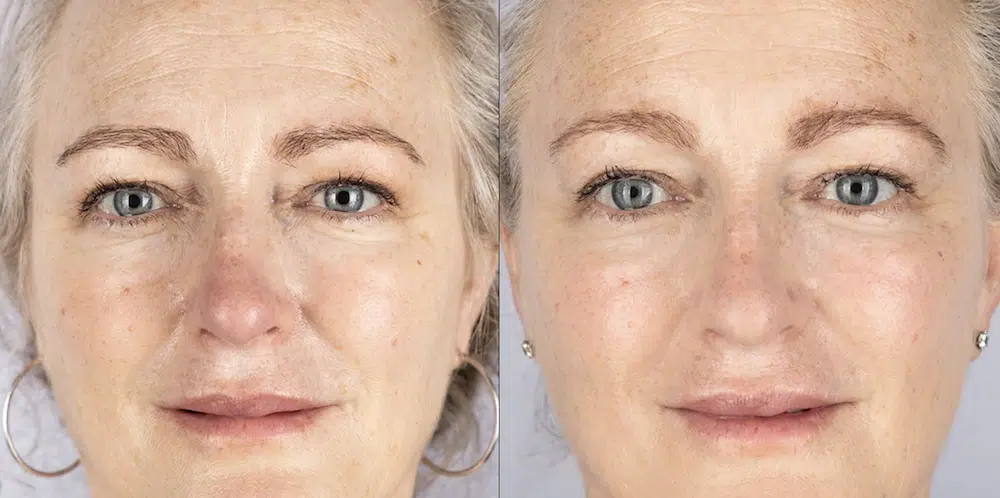
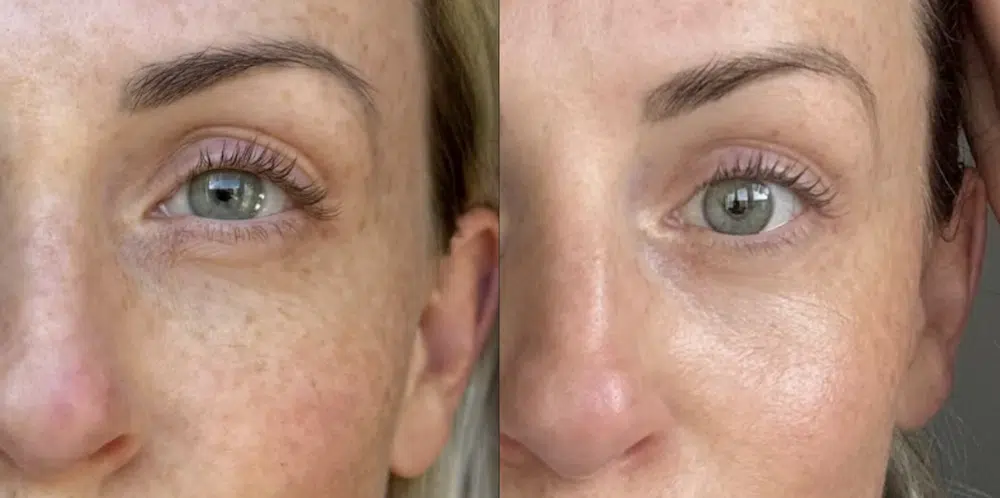
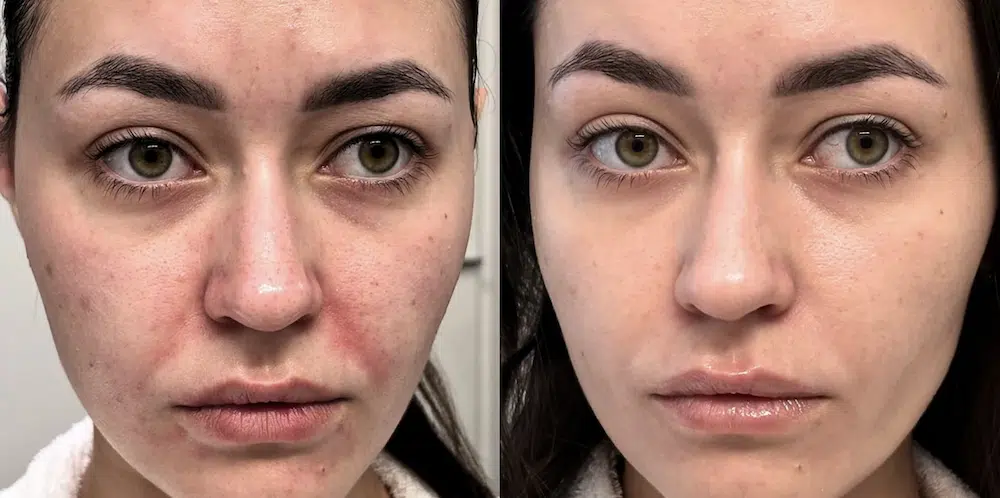
Clinical studies using controlled trials have shown measurable improvements in:
Skin texture and roughness
Collagen density (confirmed via ultrasound imaging)
Fine lines and wrinkles
Overall skin tone and complexion
Why wavelength and dosage matter
Not all red light is the same. The wavelength determines how deeply the light penetrates:
Red light (around 660nm) – Absorbed efficiently by surface tissues; great for skin tone, texture, and superficial wrinkles.
Near‑infrared (around 850nm) – Penetrates deeper, reaching tissues below the dermis and supporting collagen remodeling in deeper layers.
The dose (measured as energy density) also matters. Too little, and you won’t see results. Too much, and you risk overstimulation or even damage.
This is where professional treatment makes a real difference.
At‑home devices vs professional red light therapy
I’m not saying at‑homered light devices don’t work—many of them do offer some benefit. But there are meaningful differences between what you can do at home and what we can achieve in a medical setting.
At‑home devices:
Lower power output (to ensure safety for untrained users)
Smaller treatment area (you’re treating one zone at a time)
Inconsistent adherence (results depend on you using it correctly, consistently, for months)
Variable quality and wavelength accuracy (not all devices are what they claim to be)
Professional treatment at Skin Vitality:
Medical‑grade devices with controlled, calibrated wavelengths and power output
Larger treatment area (we can treat your full face or targeted zones efficiently)
Consistent protocol (we control the dosage, timing, and frequency to optimize results)
Combined approach (we can layer red light with other treatments like BellaMD facials, microneedling, or post‑laser care for enhanced outcomes)
Think of it this way: at‑home red light is like doing bodyweight exercises in your living room. Professional treatment is like working with a trainer in a fully equipped gym. Both have value, but the intensity, consistency, and results are different.
What red light therapy at Skin Vitality looks like
When you come in for red light therapy, here’s what to expect:
Session length: Typically 15–30 minutes depending on the treatment area and your goals
Frequency: Most protocols involve 2–3 sessions per week for several weeks, then maintenance sessions
Experience: You’ll sit or lie comfortably under the device. It’s non‑invasive, painless, and there’s no downtime. Some people feel mild warmth.
Results timeline: You may notice subtle improvements in skin tone and texture within a few weeks. Optimal results typically develop with consistent treatments over time.
We customize your plan based on your specific skin concerns—whether that’s general anti‑aging, post‑treatment healing, inflammation reduction, or supporting other aesthetic procedures.
Who should consider professional red light therapy
I recommend red light therapy for patients who:
Want to support collagen production and skin quality as part of a long‑term anti‑aging strategy
Are dealing with redness, inflammation, or post‑procedure healing (great after lasers, peels, or microneedling)
Have dull, uneven skin tone or early signs of aging
Want a gentle, non‑invasive treatment with zero downtime
Are interested in a science‑backed modality that complements their existing skincare routine
Who should skip it (or proceed with caution)
Red light therapy is safe for most people, but it’s not appropriate for everyone:
Those with photosensitivity or taking medications that increase light sensitivity
Patients with certain medical conditions that affect light response
Anyone with unrealistic expectations (red light is supportive and gradual, not a replacement for more intensive treatments like lasers or injectables)
That’s why we always start with a complimentary consultation to review your health history and make sure red light therapy is a good fit.
Final thoughts: red light therapy as part of your plan
Red light therapy isn’t a magic bullet. It won’t replace your retinol, your Botox, or your sunscreen. But as a supportive treatment that works at the cellular level to improve collagen, reduce inflammation, and enhance overall skin health, it’s one of the most evidence‑backed, low‑risk options available.
And when done professionally, with medical‑grade equipment and a consistent protocol, the results are real and measurable.
If you’re curious about adding red light therapy to your skincare routine, book a complimentary consultation at any of our 14 Skin Vitality locations across Ontario. We’ll build a personalized plan that makes sense for your skin and your goals.
At Skin Vitality, we specialize in advanced aesthetics, medical-grade treatments and personalized body contouring plans tailored to your unique body, goals, and lifestyle. With over 200 medically trained staff across 14 clinics, and proudly serving Ontario since 1992, we’re Canada’s #1 provider of Botox®, Juvederm®, and CoolSculpting®, and the leading provider of EMSCULPT NEO in Ontario.
Our treatments are clinically overseen by Dr. Ramzan, MD, Medical Director at Skin Vitality Medical Clinic and a board-certified physician. Treatments are performed by licensed nurses, injectors, and technicians.
We don’t believe in one-size-fits-all treatments, we believe in custom transformations backed by medical expertise, proven technology, and trust.